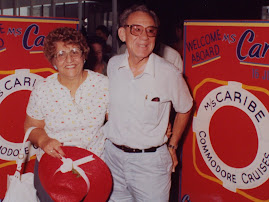
Today commemorates the 2nd year of my father’s death. I will always remember this date because it is a day before my birthday. I prayed that he would not die on my birthday but dying the day before my birthday is really not any better. I will always remember this date for the rest of my life as the day I lost my daddy.
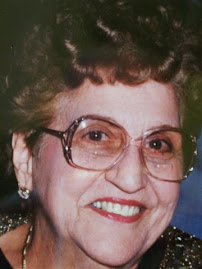
My father was afraid of death but was prepared for it in a strange way. He had written his obituary many years before his death; picked the picture he wanted to attach to his death notice and had pre-paid for his mausoleum space (right below my mother's space).
Approximately one month before his death, he had quit eating. This was odd behavior for him because he loved to eat. He did not have an appetite and pushed food away and lost weight. He lacked mobility and balance. He was going downhill fast and entered Hospice. One week later he was gone. I would like to think that at the end he was not afraid of death at all but wanted to be with my mother who had died five months earlier.
So today, I fondly remember his beautiful smile, his loving words, and his wisdom. He was a mentor not only to my brother but also to me. He was a true example of what a father should be to his children. I know that he is happy in heaven with my mother.
Showing posts with label dementia. Show all posts
Showing posts with label dementia. Show all posts
Sunday, February 22, 2009


Thursday, December 4, 2008
Dementia and My Mother
My father had dementia. At times my father did not know who my mother was or that she was ill. He sometimes referred to her as the “man without hair” or sometimes referred to her as two people. My mother had non-Hodgkin’s Lymphoma and had taken treatments that caused her to lose her hair. He did not remember my mother’s name and for the last few years of her life did not say her name. This was ironical since all of my childhood and adult years; I would hear him say her name thousands of times. “Marina, where’s my coffee”, “Marina, get me a glass of water”, or “Marina, have you heard from the kids?” You see my father was totally dependent on my mother to take care of things, always.
My mother was a woman who for fifty-nine years cooked special and delicious meals for my diabetic father. This was a woman who served my father coffee in bed every morning of their married life. I do not know of anyone as selfless as my mother. She was his second “mother”, his partner in business, his love, and his caregiver. How could he forget her name?
My mother would get very frustrated and her feelings would get hurt when he wouldn’t say her name. Can you imagine your spouse forgetting your name after you have devoted a lifetime to their well being? It didn’t make sense to her. It didn’t make sense to me or my siblings.
In his state of dementia, you never knew when he would be in his “zone” or in reality. He always recognized my siblings and me, for which were very thankful. We asked if there was any medication to help his memory but there was only Alzheimer’s medication which was prescribed and he took but it did not help. There was no medication for dementia.
My mother never gave up, even when she saw no improvement in my father’s condition. When I called my mother on the phone, she would ask me to talk to my father. She wanted him to have conversations with people to help stimulate his brain. We did not know at this time that my father was having small strokes that were deteriorating his brain. My mother tried to get him to remember things. Again, we didn’t know at the time that one of the worst things you can do is try to force dementia patients to remember things. She could not take care of my father’s problem which was impossible for her to accept.
My mother had great difficulty coping with my father’s dementia. Sometimes he acted normal and other times he was like a stranger. The ups and downs of dementia is what my mother contended with hourly, daily -- for nearly two years, until her death.
How do you take care of one parent who is dying while taking care of the other who has dementia? Which one needs the most attention? How do you tell your mother to be logical, not to be so emotional when her heart is breaking? What could I have done differently?
Visit http://www.thecaregiversvoice.com/blog/blog/ to read more articles about dementia.
Subscribe to:
Posts (Atom)